
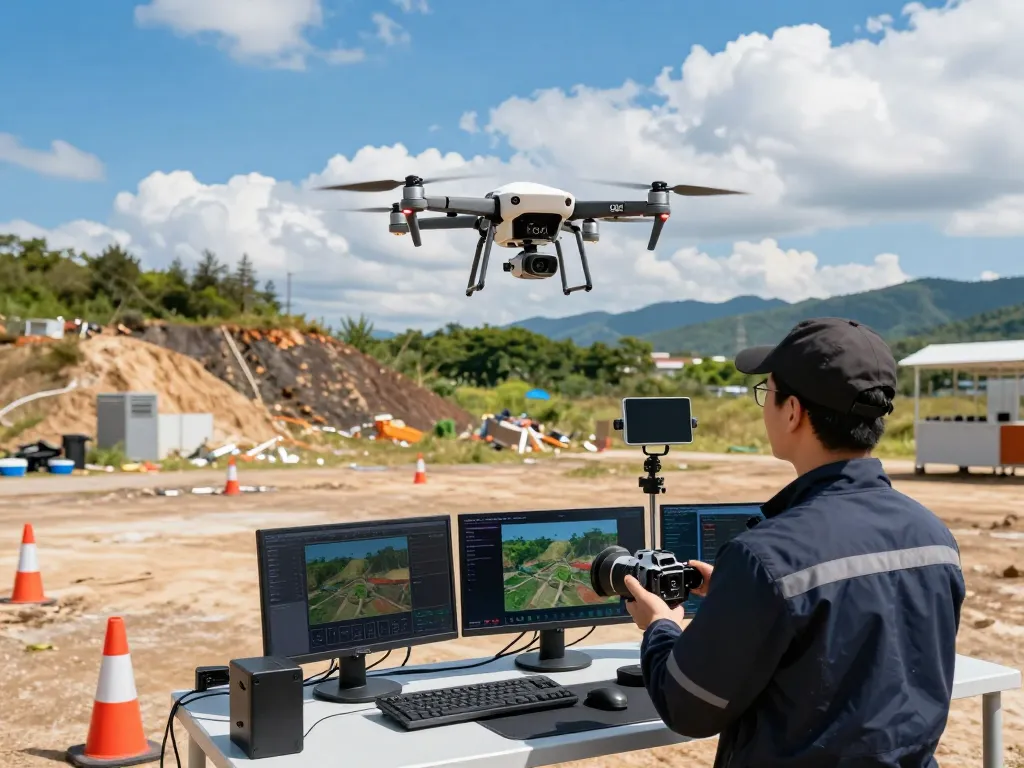
Understanding the DJI L2: Key Features and Innovations
The DJI L2 is at the forefront of aerial mapping technology, leveraging advanced LiDAR systems to deliver unprecedented accuracy and efficiency. This cutting-edge device has been designed for integration with various DJI drones, making it an appealing choice for professionals across multiple industries. The dji l2 stands out not only for its technical prowess but also for its user-friendly design, ensuring users can maximize its potential without extensive training.
What Sets the DJI L2 Apart?
The DJI L2 is distinguished by its powerful features, including native integration with the DJI Matrice 300 and 350 RTK drones. This seamless compatibility allows for a streamlined experience, enabling quick deployment in various environments. Unlike its predecessor, the L1, the L2 boasts a 4 cm vertical accuracy, significantly enhancing data quality and reliability. This level of precision makes it ideal for surveying and mapping tasks that demand meticulous detail.
Technical Specifications of the DJI L2
- LiDAR Sensor: Advanced dual LiDAR sensor technology provides high-density point clouds.
- Vertical Accuracy: Achieves up to 4 cm accuracy under optimal conditions.
- Data Collection Speed: Capable of capturing data at speeds of up to 15 m/s.
- Dual-Camera System: Equipped with RGB and infrared cameras for enhanced imaging.
- Range: Effective detection range of up to 450 meters, ensuring versatility in diverse applications.
User-Friendly Features of the DJI L2
Designed with the operator in mind, the DJI L2 includes a user-friendly interface that simplifies the setup process. The flight planning software allows users to easily define flight paths and manage data collection parameters, regardless of their experience level. Furthermore, the L2 features real-time data streaming, enabling users to monitor operations as they unfold.
Applications of the DJI L2 in Various Industries
How the DJI L2 Enhances Surveying and Mapping
In the surveying and mapping sectors, the DJI L2 excels by providing precise topographical data that can be utilized for land surveys, urban planning, and environmental assessments. Its high point density and accuracy facilitate the creation of detailed 3D models. This functionality is particularly beneficial in terrain analysis, where a comprehensive understanding of the landscape is necessary for informed decision-making.
Utilizing DJI L2 in Environmental Studies
The environmental sector is seeing significant benefits from the DJI L2’s capabilities. Researchers and conservationists use its LiDAR technology to assess vegetation height, biomass, and health, allowing for effective monitoring of ecosystems. The ability to penetrate tree canopies and gather accurate data on forest structures is invaluable for studies on biodiversity and habitat preservation.
Commercial Uses of the DJI L2 in Construction
Construction companies leverage the DJI L2 for site analysis, project planning, and progress tracking. The precision provided by the LiDAR system assists in identifying potential obstacles and calculating material requirements more accurately. Moreover, the integration of high-definition imagery with the 3D point cloud enhances communication among stakeholders, leading to more efficient project execution.
Getting Started with the DJI L2: A Step-by-Step Guide
Initial Setup and Configuration of DJI L2
Setting up the DJI L2 involves several critical steps to ensure optimal performance. Begin by charging the drone and LiDAR unit, followed by updating the firmware to the latest version. Once the hardware is prepared, the DJI Ground Station Pro software can be used for configuring the flight path, altitude, and data collection settings tailored to the specific project requirements.
Best Practices for Data Collection with DJI L2
To achieve the best results with the DJI L2, adhere to best practices during data collection. These include selecting appropriate flight altitude based on the terrain and desired point density, and ensuring stable weather conditions for minimal turbulence. Operators should also perform pre-flight checks to confirm that all systems are operational before beginning a mission.
Post-Processing Data from the DJI L2
Post-processing is vital for extracting usable data from the point clouds captured by the DJI L2. Users can employ software like DJI Terra or other GIS tools to convert LiDAR data into 3D models, conduct analysis, and generate maps. It’s essential to apply filtering and classification techniques to enhance data quality and ensure accuracy in the final outputs.
Common Challenges and Solutions with DJI L2
Addressing Accuracy Issues with the DJI L2
While the DJI L2 is engineered for high accuracy, users may occasionally encounter discrepancies in data collection. Common issues include improper parameter settings or suboptimal flying conditions. Ensuring that the drone is well-calibrated and that the flight path adheres to recommended protocols can mitigate these challenges, leading to improved accuracy in data collection.
Overcoming Environmental Obstacles in Data Collection
Environmental factors such as trees, buildings, and weather conditions can obstruct LiDAR data collection. To address these challenges, operators should conduct flights in favorable conditions and consider adjusting flight patterns to optimize data capture in complex environments. Employing pre-flight surveys can also help identify potential obstacles that could affect data quality.
Maintenance Tips for Optimal DJI L2 Performance
To maintain the performance of the DJI L2, regular maintenance is essential. This includes routine inspections of the hardware, ensuring the LiDAR components are clean and free from debris, and promptly addressing any software updates. Keeping the equipment in optimal condition will prolong its lifespan and enhance data collection capabilities.
The Future of Aerial Mapping: Trends for 2026 and Beyond
Predictions for DJI Technology Advancements
As drone technology evolves, future iterations of the DJI L2 are likely to incorporate even more sophisticated features. Increased autonomy, enhanced data processing capabilities, and improved battery life are expected to be focal points in future developments. These advancements will not only enhance user experience but will also broaden the application scope of aerial mapping technologies.
Emerging Trends in LiDAR Applications
The use of LiDAR technology is anticipated to expand beyond traditional mapping and surveying applications. New industries, including agriculture, disaster response, and urban development, are beginning to recognize the potential of LiDAR in enhancing operational efficiency and data accuracy. As the technology becomes more accessible, its integration into diverse sectors is set to grow.
Preparing for Innovations in Drone Integration
To effectively prepare for innovations, professionals should stay updated on emerging trends and continuously seek training opportunities. Engaging in industry forums and workshops can facilitate knowledge exchange and foster collaboration among experts. As the landscape of drone technology continues to shift, remaining ahead of the curve will empower users to leverage advancements effectively.
What industries can benefit from the DJI L2?
Various industries can capitalize on the capabilities of the DJI L2, including surveying, construction, environmental conservation, and agriculture. Its precision and efficiency make it a versatile tool for professionals needing accurate data and rapid results.
How does the DJI L2 compare to its predecessors?
The DJI L2 outperforms its predecessors, such as the L1, with improved vertical accuracy, higher data collection speeds, and enhanced imaging capabilities. These advancements make the L2 a superior choice for tasks requiring precise data collection and analysis.
What are the key advantages of using the DJI L2 for mapping?
Key advantages include its integration with DJI drones, high accuracy levels, and the ability to quickly gather extensive data sets. These features enhance workflow efficiency and reduce operational costs, making it an attractive option for professionals.
Is the DJI L2 suitable for beginner users?
Yes, the DJI L2 is designed with user-friendliness in mind, which makes it accessible to beginner users. Comprehensive documentation and intuitive software interfaces facilitate a smoother learning curve.
What metrics should be tracked for DJI L2 performance?
Important metrics include data accuracy, point density, flight efficiency, and battery life. Monitoring these factors ensures optimal performance and helps in assessing the effectiveness of data collection efforts.